What Are Sign Substrates?
A sign substrate is the base material onto which graphics, inks, or vinyl are applied to produce a finished sign. The substrate determines how a sign performs in its environment — how long it lasts, how it handles weather and UV exposure, how it mounts, and how it looks at the viewing distance for which it was designed. Choosing the right substrate is one of the most consequential decisions in any sign project, affecting total cost, installation method, permit compliance, and lifespan.
Sign substrates fall into two broad categories: rigid panels used for permanent or semi-permanent installations, and flexible media used for banners, wraps, and temporary displays. Within each category, materials differ significantly in weight, thickness, surface texture, and suitability for indoor versus outdoor use.
Common Rigid Substrates
Rigid substrates are used wherever a sign must hold its shape independently — mounted to a wall, post, or frame without additional support structure. The following materials are standard across the commercial sign industry.
- Aluminum composite material (ACM): Two thin aluminum skins bonded to a polyethylene core. ACM panels are lightweight relative to their rigidity, weather-resistant, and accept direct print, vinyl, or painted finishes. They are widely used for building identification, wayfinding, and monument faces. Standard thicknesses run from 3mm to 6mm.
- Corrugated plastic (coroplast): A twin-wall polypropylene sheet with internal flutes running along its length. Inexpensive and lightweight, corrugated plastic is used for temporary outdoor signs, real estate signs, and election signage. It is not UV-stable long-term and is generally considered a short-term substrate.
- PVC foam board (sintra/foamex): An expanded rigid PVC sheet that is easy to cut, route, and paint. Foam board is commonly used for interior retail displays, dimensional lettering, and trade show graphics. It is not recommended for prolonged outdoor exposure without protective lamination.
- HDU (high-density urethane): A dense foam-like material that carves and routes like wood but does not absorb moisture. HDU is the standard substrate for dimensional carved signs, including dimensional letters, sandblasted looks, and decorative panels intended for exterior use.
- Dibond: A brand-name ACM variant with a solid polyethylene core and a slightly thicker aluminum face. Often used interchangeably with generic ACM for high-quality exterior applications where surface flatness is critical.
- Polycarbonate and acrylic sheet: Clear or colored thermoplastic panels used for illuminated cabinet faces, push-through letter faces, and displays requiring light transmission. Acrylic is more brittle but more optically clear; polycarbonate is more impact-resistant and used where vandalism or physical stress is a concern.
- Steel and aluminum sheet: Solid metal panels are used for applications requiring extreme rigidity, heavy-duty mounting, or specific finish requirements such as brushed or powdercoated metal aesthetics.
Flexible Substrates
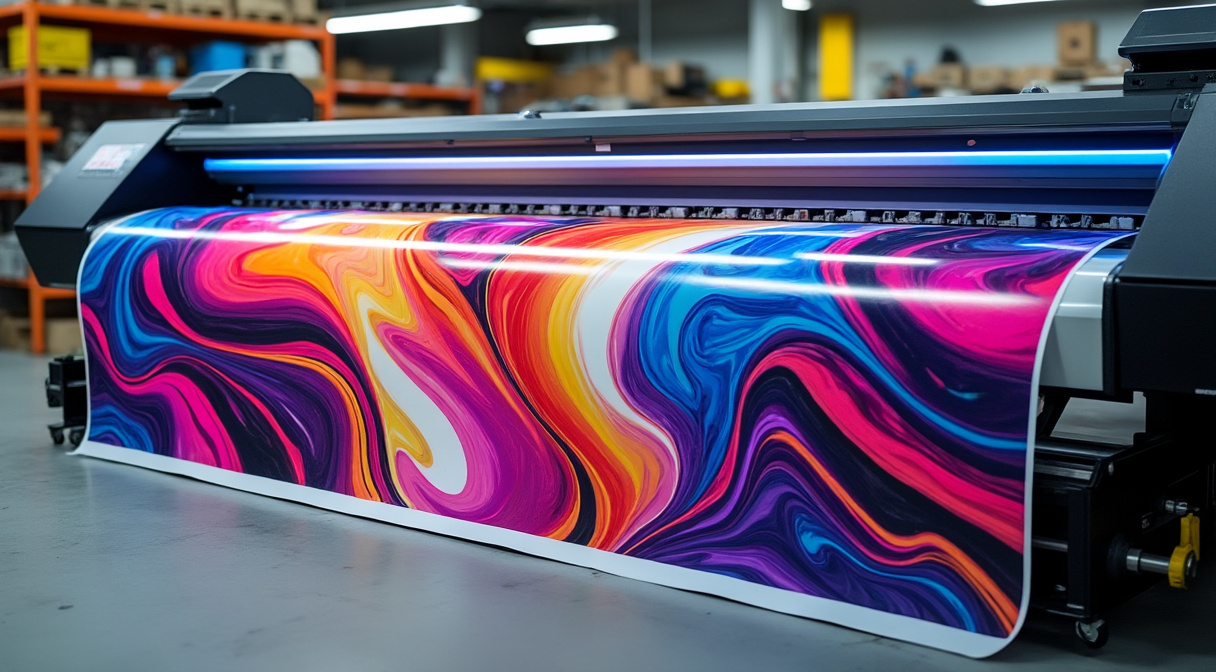
Flexible substrates are used when the sign must conform to a curved surface, be rolled for shipping, or be suspended under tension. These materials are almost always printed digitally using wide-format inkjet equipment.
- Vinyl banner material: A woven or knitted polyester scrim coated with PVC on both faces. Banner vinyl is the standard substrate for hanging banners, event signage, and temporary outdoor displays. Weights are measured in ounces per square yard; 13 oz is a common general-purpose weight, while heavier grades (15–18 oz) are used for high-wind or long-term outdoor applications.
- Mesh banner: A perforated vinyl material that allows wind to pass through. Mesh is specified for large-format fence wraps, building wraps, and scaffolding displays where solid vinyl would create dangerous sail loading.
- Adhesive vinyl: A calendered or cast vinyl film with a pressure-sensitive adhesive backing. Cast vinyl conforms more precisely to curved or irregular surfaces and resists shrinkage over time; calendered vinyl is less expensive and appropriate for flat or mildly curved applications. Cut vinyl and printed-and-cut vinyl are both produced from these films.
- Fabric media: Polyester fabrics used for tension fabric frame systems, trade show displays, and backlit graphic applications. Fabric prints are typically produced via dye-sublimation and offer a softer, premium appearance compared to vinyl.
Selecting the Right Substrate
No single substrate is universally superior. The appropriate choice depends on several interrelated factors.
- Environment: Outdoor signs require UV-stable, moisture-resistant materials. Indoor signs tolerate a much broader range of substrates, including those that would degrade outdoors.
- Mounting method: Heavy rigid panels require engineered attachment points. Some substrates, such as ACM, can be routed to accept standoffs or post mounts; others must be framed or bracketed.
- Permit requirements: Many jurisdictions regulate sign materials, particularly for illuminated signs or signs attached to buildings. Flame-spread ratings and wind-load certifications may govern substrate selection for permitted installations.
- Display life: Short-term promotional signage does not justify the cost of a long-life substrate. Conversely, a permanent exterior identification sign warrants materials rated for ten or more years of outdoor exposure.
- Print compatibility: Different substrates accept different ink systems. UV-cured inkjet, solvent inkjet, latex inkjet, and screen printing each have substrate compatibility requirements. Surface porosity, off-gassing, and ink adhesion must all be verified before production.
Understanding substrate properties allows for informed decisions that balance initial material cost against installation complexity, longevity, and the total cost of ownership over the sign's intended service life. A fabricator's published material list is a useful cross-check on these trade-offs — see https://www.vslprint.com/ for one New York shop's range.
Further reference: https://en.wikipedia.org/wiki/Signage · https://sites.google.com/emeryeps.com/vslprint-commercialprintingnyc/installations