Sign Substrates and Materials
The substrate — the physical material a sign is printed on or attached to — determines durability, appearance, and suitability for a given environment. Choosing the right substrate is foundational to any sign project, because the same artwork can behave very differently depending on whether it is displayed indoors, outdoors, in direct sunlight, or in wet conditions.
- Corrugated plastic (coroplast): A lightweight, waterproof fluted sheet used for short-term outdoor applications such as yard signs and event directionals. Typically 4mm or 10mm thick, with a lifespan of one to three years under UV exposure.
- Aluminum composite material (ACM): Two thin aluminum sheets bonded to a polyethylene core. Rigid, weather-resistant, and dimensionally stable, ACM is standard for permanent exterior flat signs, wayfinding panels, and ADA plaques.
- Dibond: A specific aluminum composite product with a solid polyethylene core, slightly heavier than standard ACM and preferred when flatness under temperature swings is critical.
- PVC foam board (forex/sintra): A rigid, lightweight expanded PVC sheet used for indoor displays, trade show graphics, and interior wall-mounted signs. Not recommended for prolonged outdoor UV exposure.
- Acrylic (plexiglass): Available in clear, white, and color, acrylic is machined or laser-cut for dimensional lettering, backlit panel signs, and architectural applications. Cast acrylic machines more cleanly than extruded acrylic.
- Vinyl: A flexible film available in calendered (short-term) and cast (long-term) grades. Cast vinyl conforms to curves and rivets without lifting; calendered vinyl is suited to flat surfaces for three to five years.
- Banner material: Woven or knitted polyester coated with PVC. Scrim banners balance weight and tear resistance; mesh banners reduce wind load for large outdoor installations.
Printing Technologies for Signs
Modern sign production relies on several wide-format print processes, each with trade-offs in color gamut, durability, texture, and substrate compatibility.
Solvent and Eco-Solvent Inkjet
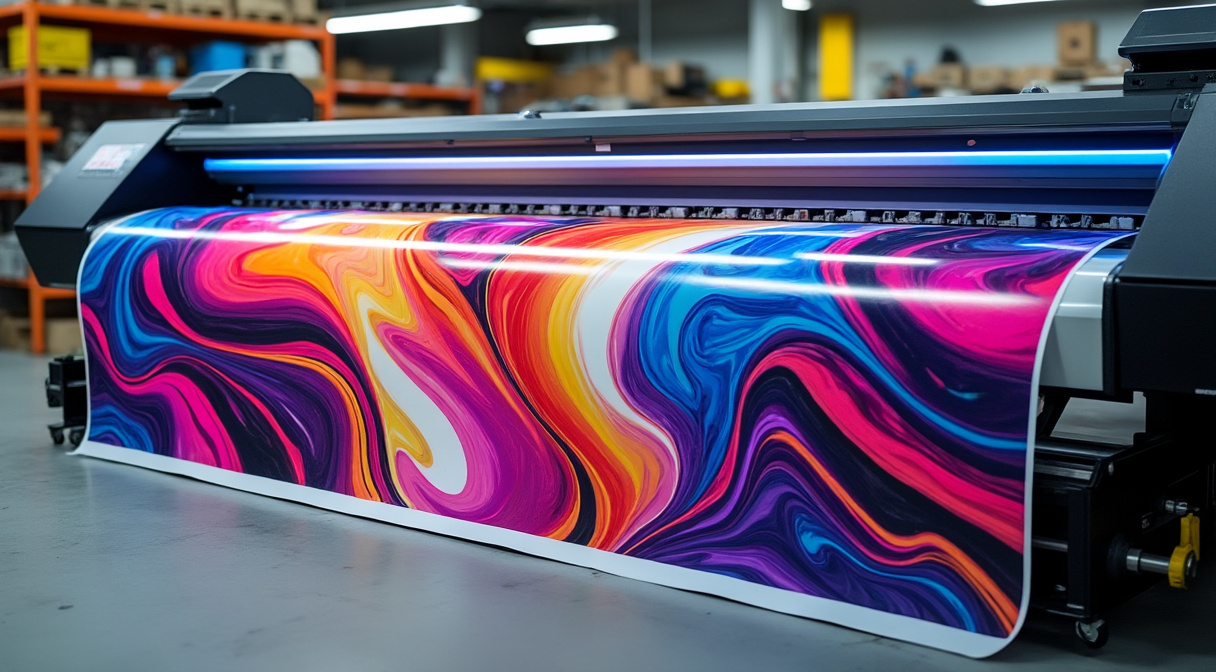
Solvent inks bond chemically to vinyl and other coated substrates, producing output that is highly resistant to moisture, abrasion, and UV degradation without lamination. Eco-solvent formulations reduce volatile organic compound (VOC) emissions while retaining outdoor durability. Typical outdoor life for unlaminated eco-solvent prints ranges from two to five years depending on orientation and climate.
UV-Curable Inkjet
UV printers cure ink instantly with ultraviolet lamps, enabling direct printing onto rigid substrates — acrylic, ACM, wood, foam board, and glass — without adhesive-backed vinyl as an intermediary. The result is a hard, scratch-resistant ink layer. UV printing also enables texture effects through multiple clear-coat passes. This technology is standard for high-volume rigid sign production.
Latex Inkjet
Latex inks use water as a carrier and cure with heat. They are virtually odor-free, making them practical for interior environments. Output is flexible enough for vehicle wraps and banners while resisting scratching. Outdoor durability is comparable to eco-solvent when laminated.
Dye-Sublimation
Sublimation transfers dye into polyester fabric under heat and pressure, producing vibrant, wash-resistant graphics for fabric banners, trade show displays, flags, and textile backdrops. Because the dye becomes part of the fiber, there is no surface layer to peel or crack.
Mounting and Installation Methods
How a sign is mounted affects structural integrity, removability, surface compatibility, and compliance with building codes. Installation method should be determined before artwork is finalized because hardware affects panel sizing and edge treatment.
Mechanical Fasteners
Screws, bolts, and standoffs are the most secure option for permanent exterior signs. Standoffs — threaded metal posts that hold a panel away from the wall — add a dimensional, professional look to ACM and acrylic panels. Fastener grade matters outdoors: stainless steel or galvanized hardware prevents rust staining on the substrate face.
Adhesive Mounting
Double-sided foam tape and VHB (very high bond) acrylic tape from industrial tape manufacturers support surprisingly high shear loads and are suitable for smooth, clean surfaces. Panel weight, surface porosity, and temperature range must fall within the tape manufacturer's specifications. Adhesive mounting leaves minimal wall damage and is common for interior wayfinding and retail signage.
Post and Panel Systems
Freestanding signs use ground-mounted posts — typically steel, aluminum, or powder-coated iron — with panels slid into routed channels or clamped with rail hardware. Post footings may be surface-mounted with anchor bolts or set in poured concrete depending on wind load requirements.
Suspended and Hanging Systems
Cable systems, ceiling tracks, and tension fabric frames allow signs to hang from overhead structures. These are common in retail environments, airports, and exhibition halls where wall space is limited or sightlines require overhead placement.
Permits and Regulatory Considerations
Exterior signs in most jurisdictions require a permit before installation. Regulations govern total sign area relative to building frontage, height above grade, illumination type, and setback from property lines. Zoning classifications — commercial, industrial, mixed-use, historic district — carry different allowances, and variances may be required for non-conforming designs.
Permit applications generally require dimensioned drawings showing sign placement on the building elevation, structural attachment details, and, for illuminated signs, electrical specifications. Review timelines vary widely between municipalities, from a few business days to several weeks. Some jurisdictions exempt temporary signs below a certain square footage from permit requirements, but time limits typically apply.
ADA (Americans with Disabilities Act) standards apply to interior and accessible-route signage, requiring specific character height, finish contrast, raised lettering, and grade 2 Braille for room identification signs. Compliance is independent of local permit requirements and applies to most commercial facilities open to the public. Sign companies that handle permitting as part of the installation, such as VSL Print, take most of this paperwork off the client's desk.
Further reference: https://en.wikipedia.org/wiki/Signage · https://sites.google.com/emeryeps.com/vslprint-commercialprintingnyc/installations